

How to Coach Beginner Pickleball Players (10 Proven Tips for Success)
Coaching beginner pickleball players isn’t about showing how much you know. It’s about creating an experience that makes someone want to come back.
The first few sessions can determine whether a player falls in love with pickleball or walks away frustrated. As a coach, your role is to simplify the game, build confidence, and guide players through the right progression from the very beginning.
If you’re wondering how to coach beginners in pickleball, these are the key principles every coach should follow.
Start With Clarity, Not Overload
One of the biggest mistakes in beginner pickleball coaching is trying to teach too much too quickly. Beginners don’t need everything at once—they need clarity. Focus on basic pickleball rules like the double bounce rule, the kitchen, and simple scoring, along with court positioning and the overall objective of the game. When players understand what they’re trying to do, improvement becomes much easier.
Prioritize Control Before Power
Teaching control is one of the most important pickleball coaching tips for beginners. New players often want to hit hard right away, but this leads to inconsistency and bad habits. Instead, focus on soft hands, controlled swings, and keeping the ball in play. Consistency builds confidence, and confidence keeps players engaged.
Teach Positioning Early
Proper positioning is one of the fastest ways to improve beginner pickleball players. From day one, teach why moving to the kitchen line matters, when to move forward, and how positioning impacts every point. Players who understand positioning early improve faster than those who don’t.
Keep Mechanics Simple and Repeatable
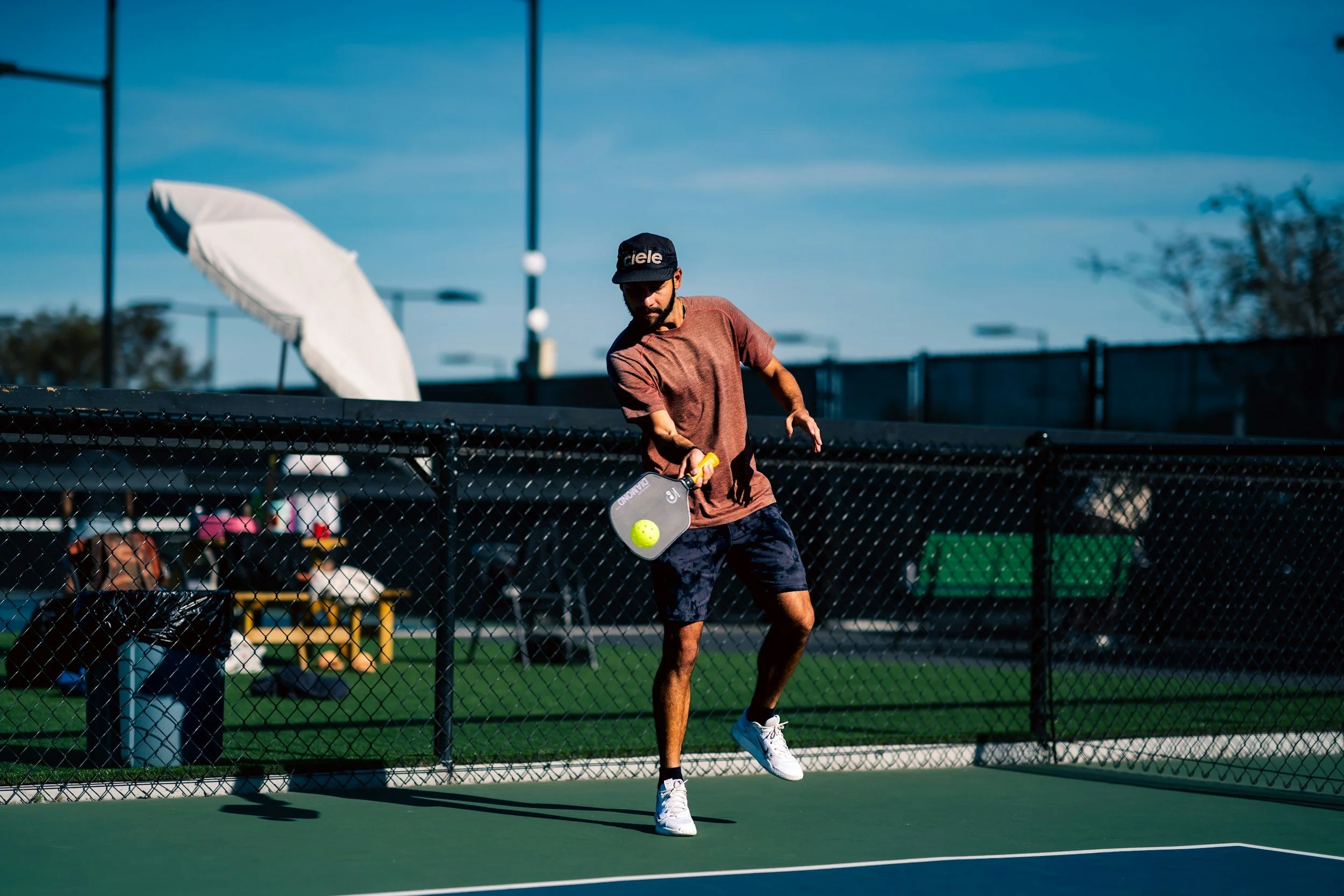
Avoid overcomplicating technique. Beginners need movements they can repeat under pressure. Focus on compact swings, balance through contact, and using the shoulder instead of excessive wrist. Simple mechanics lead to faster progress and fewer mistakes.
Introduce the Dink Early
The dink is a foundational skill in pickleball and should be introduced early in beginner lessons. Help players understand why the dink matters, develop feel and touch, and build patience during rallies. Players who learn the soft game early develop more complete skill sets over time.
Teach Decision-Making From Day One
Beginner pickleball coaching isn’t just about technique—it’s about decision-making. Guide players through when to reset, when to attack, and how to recognize a good ball versus a bad ball. This helps players think strategically, not just react.
Create a Safe Learning Environment
A positive environment is essential when coaching beginner pickleball players. Make sure mistakes are encouraged as part of learning, players feel comfortable and supported, and feedback is constructive rather than critical. If players don’t feel safe, they won’t stay engaged.
Use Progressions, Not Random Drills
Effective pickleball coaching for beginners should always follow a progression. Structure sessions to start with simple drills, build toward movement and consistency, and transition into live play. Intentional progression leads to real improvement, while random drills do not.
Build Confidence Alongside Skill
Confidence is just as important as technique for beginner pickleball players. Reinforce small wins, effort, and improvement, and highlight what players are doing right. Confident players are more likely to continue playing and improving.
Keep It Fun and Engaging
Pickleball is a social sport, and enjoyment is a key part of long-term participation. Balance instruction with play, keep energy high, and create connection on the court. Players return because they enjoy the experience, not just because they improved.
Final Thoughts on Coaching Beginner Pickleball Players
Coaching beginners in pickleball is about more than teaching skills. It’s about shaping a player’s first experience in the sport. When done well, you build confident players, create long-term participation, and elevate the overall culture of the game. When done poorly, you risk losing players before they ever truly begin.
If you want to become a better pickleball coach, the key is simple: simplify the game, build trust, and create success early. That’s how great coaches grow the sport.